NEWS
It is no accident that the rails are made into an I-shape. It is a shape that perfectly meets the force requirements while using the least amount of material.
Why are the load-bearing beams of high-rise buildings often made of I-beam steel?
The principle is the same: distributing the material away from the central axis greatly improves its bending resistance.
A rail is essentially an I-beam lying down, requiring it to withstand the immense pressure from the wheels above while minimizing bending.
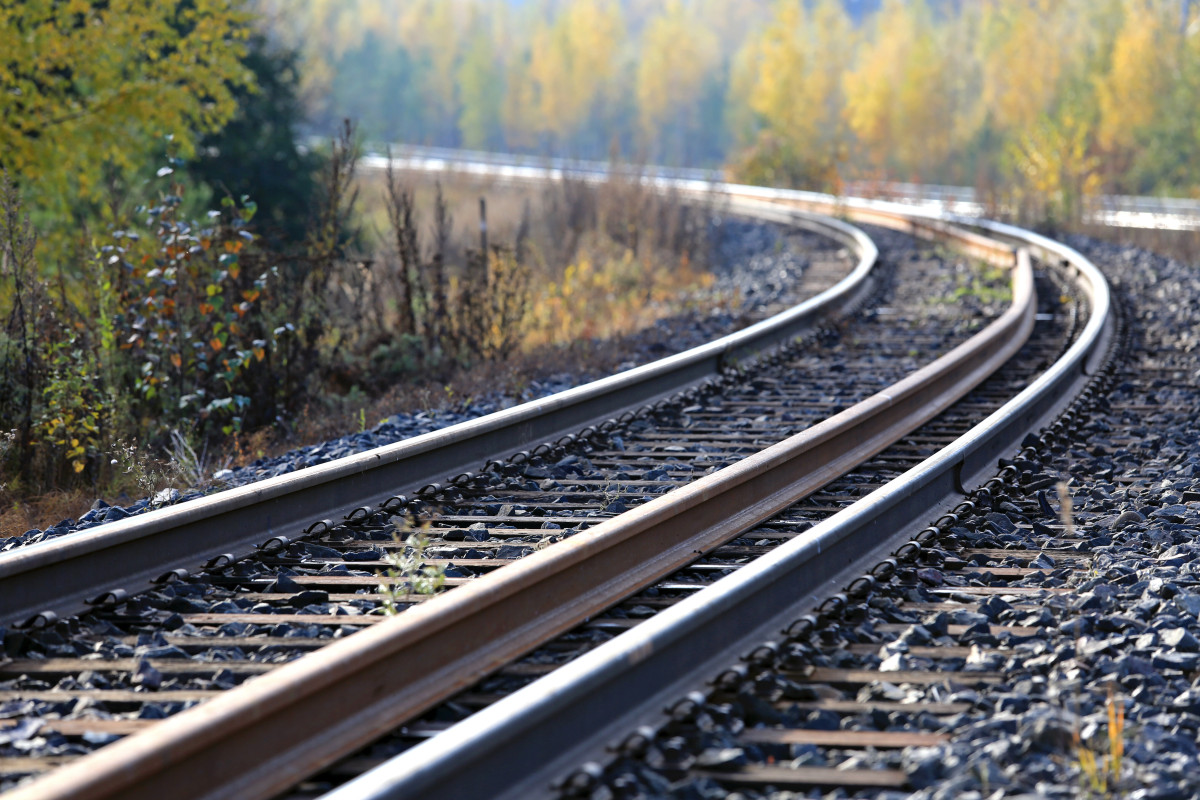
The I-shape of rails is primarily due to its ability to meet mechanical performance requirements, adapt to wheel structure, reduce costs, and facilitate maintenance.
Excellent Mechanical Properties
I-shaped rails have a large section modulus and moment of inertia, allowing them to withstand significant bending and shear forces. When a train is running, the rails are subject to significant pressure and bending moments. The I-shaped structure effectively resists flexural deformation, making the rails less susceptible to bending and breaking under heavy loads, ensuring safe train operation.
Adaptable Wheel Structure
A rail consists of three parts: the rail head, the rail waist, and the rail base. The narrow and thick rail head fits perfectly into the wheel flange, ensuring a tight wheel-rail contact and smooth train operation. It also offers excellent wear resistance, extending the rail's service life.
Good stability
The rail's wider base provides a larger load-bearing surface, increasing the contact area between the rail and the sleeper and evenly distributing pressure. Combined with the combined effects of the fasteners and sleepers, the rail is more stable under load, capable of withstanding greater pressure and impact, and less susceptible to displacement.
Material Savings
The I-beam structure, through its rational shape design, fully utilizes steel and avoids material waste while still meeting strength and stability requirements. Compared to other shapes, the I-beam section reduces steel usage without sacrificing performance, thus lowering costs.
Easy to manufacture and maintain
I-shaped rails can be manufactured using continuous casting or hot rolling, resulting in high production efficiency and relatively simple processes. If damaged during use, only the damaged section needs to be replaced, rather than the entire rail. This reduces maintenance costs.
Therefore, the "I" shape is the perfect balance of strength, stability, economy and functionality, and is the optimal rail cross-section shape after long-term practical testing.

By clicking 'Allow All', you agree to the storage of cookies on your device to enhance site navigation, analyze site usage and assist with our marketing efforts. Coo Cookie Notice