NEWS
Electrogalvanizing and hot-dip galvanizing are two common galvanizing processes, which have significant differences in process, performance, appearance and application areas.
Process
Electrogalvanizing utilizes electrolysis, placing the steel coil as the cathode in an electrolyte containing zinc ions. Direct current is then passed through the coil, depositing the zinc ions on the steel surface to form a coating.
Hot-dip galvanizing involves immersing the steel coil in molten zinc at 440-460°C. Through a chemical reaction between the steel and zinc and physical wetting, a zinc-iron alloy layer and a pure zinc layer are formed on the surface.
performance
Appearance
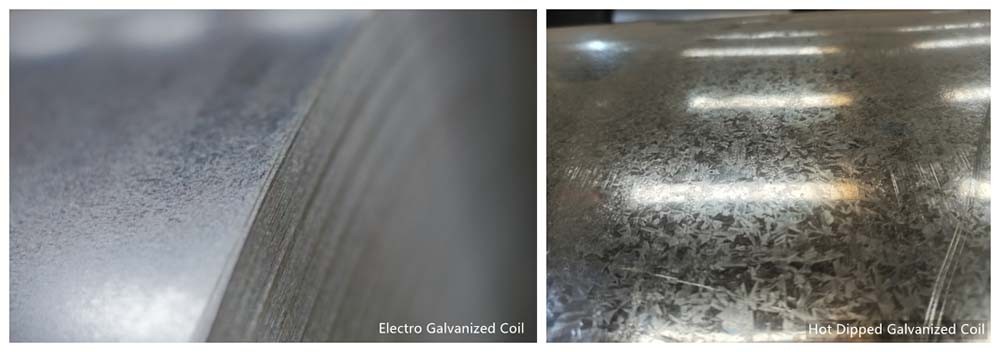
The electro-galvanized surface is smooth, uniform, and silvery white, free of zinc spangles. The hot-dip galvanized surface is rougher and may have crystalline patterns. The grayish-white color is darker, and the thicker the zinc layer, the more obvious it is.
Applications
Electrogalvanizing is used in applications requiring high surface precision and aesthetics in mild corrosion environments, such as appliance housings, electronic equipment casings, automotive interiors, and decorative panels.
Hot-dip galvanizing is used in harsh outdoor environments or for heavy-duty structures requiring long-term corrosion resistance, such as building steel structures, vehicle chassis, agricultural machinery parts, outdoor piping, and photovoltaic mounting systems.
Electrogalvanizing is more suitable for precision machining, while hot-dip galvanizing is more suitable for heavy-duty corrosion protection. In actual applications, the choice should be made based on the corrosion intensity, structural weight, appearance requirements, and cost.

By clicking 'Allow All', you agree to the storage of cookies on your device to enhance site navigation, analyze site usage and assist with our marketing efforts. Coo Cookie Notice