NEWS
Rails are strips of steel used for railway tracks, crane tracks, etc. to carry and guide wheels. They can be divided into different types according to their uses and performance differences: heavy rails are rails with a weight of more than 38 kg per meter, with high strength and good stability. They are often used on railway trunk lines and can withstand the rolling of heavy-loaded trains; light rails weigh no more than 30 kg per meter and are suitable for medium-volume rail transportation in cities, such as some urban light rail lines; QU series crane rails are specially designed for cranes, with a low height, wide head and thick waist, and can withstand the huge wheel pressure and frequent impact when the crane is running. They are commonly used materials for crane rails in ports, workshops and other places.
Rail production is a complex process involving the coordination of multiple processes and the integration of multiple technologies. Starting from the pretreatment of raw materials, through a series of core processes such as refining and vacuum degassing, to the final inspection, sawing and drilling, each process has a decisive influence on the quality of the rails.
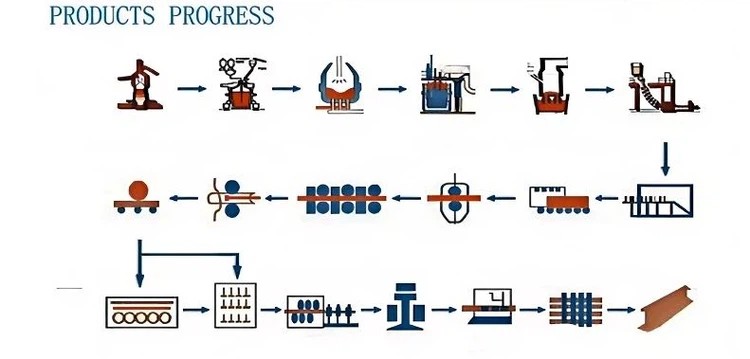
Rail production process


By clicking 'Allow All', you agree to the storage of cookies on your device to enhance site navigation, analyze site usage and assist with our marketing efforts. Coo Cookie Notice