NEWS
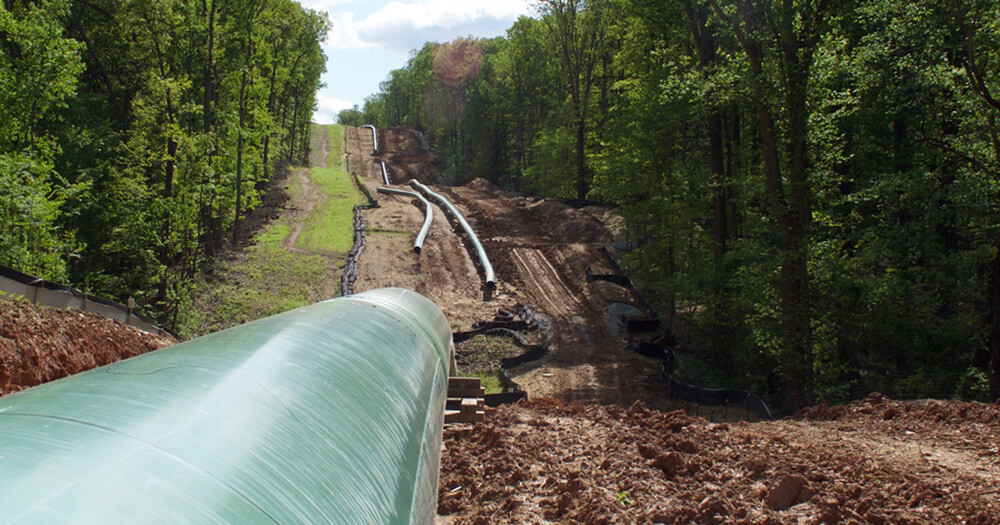
When we easily refuel our cars at a gas station, we rarely think about the long journey that fuel has taken us across mountains and rivers, from hell to heaven. Throughout this journey, there is a silent "guardian" – the fuel line.
It is not just a simple transportation channel, but a "lifeline" that ensures the safe and efficient arrival of oil and gas at their destination. Now, let's follow this energy supply chain and uncover the secret mission of oil and steel pipelines in safeguarding our energy supply.
First Stage: Deep into Hell – Drilling and Extraction
Task: Locate and establish a safe extraction tunnel from underground oil reservoirs thousands of meters deep.
The Role of Oil Pipelines: Building an "Underground Steel Great Wall"
1. Drill Pipe - Trailblazer
It's the "drive shaft" of drilling, propelling the drill bit towards the Earth's core while simultaneously delivering drilling fluid, cooling the drill bit, and carrying up rock cuttings.
2. Casing - Fortified Fortress
As drilling deepens, the wellbore needs reinforcement to prevent collapse. This is where casing is installed, and cement is injected between the casing and the wellbore.
Functions:
Stabilizing the Wellbore: Like concrete lining in a tunnel, it prevents formation collapse.
Isolating the Formation: Like a series of sealed doors, it strictly isolates high-pressure oil and gas layers, toxic gas layers (such as hydrogen sulfide), and underground freshwater layers, preventing
cross-contamination and pollution. This is the core of environmental protection and safety!
Installation Foundation: Provides the installation foundation for subsequent wellhead equipment and oil production equipment.
At this moment, the oil-steel pipeline has constructed a robust and sealed "highway tunnel" that runs directly from the surface to the oil reservoir.
Second Stage: Vertical Lifting – From Bottom to Wellhead
Task: To lift crude oil and natural gas from underground to the surface.
The Role of the Oil Pipeline: Creating a “Dedicated Elevator”
Oil Pipeline – Core Transportation Channel
Inside the casing, a thinner oil pipe is run, leading directly to the oil layer.
Crude oil and natural gas are continuously transported to the surface via this “dedicated elevator,” either under their own pressure or through artificial lifting (such as pumping units or ESPs).
Why not use the casing for direct production? Because the oil pipe is more flexible, more economical, easier to replace and maintain, and is the best channel for controlling production speed and conducting
downhole operations.
Thus, under the dual protection of the casing and oil pipe, the black “industrial blood” finally successfully reaches the surface.
The third stage: Surface gathering and transportation – reaching the processing center
Task: To gather oil and gas produced from multiple wells and transport them to the preliminary processing center.
The role of oil-gas pipelines: Building the "capillaries" of the mining area
Starting from the wellhead of each oil well, surface-laid gathering and transportation pipelines transport the oil and gas mixture to the combined station or processing plant.
While these pipelines are not strictly speaking OCTG (Oil-Gas Transmission Line), they still need to possess corrosion-resistant and pressure-resistant properties, especially when transporting crude oil
containing impurities and corrosive substances, where the material requirements are equally stringent. They are the surface extension of the oil-gas pipeline's mission.
The Fourth Stage: Long-Distance Transport
Task: To transport processed crude oil and refined petroleum products across provinces, cities, and even national borders on a large scale.
The Role of Oil Pipelines: Becoming the "Energy Artery"
Long-Distance Pipelines
Processed, purified crude oil is transported to refineries via crude oil pipelines.
Refined petroleum products such as gasoline and diesel, processed at refineries, are transported to central oil depots in various regions via refined petroleum pipelines.
These long-distance pipelines are the nation's energy lifeline. They are welded from high-strength, high-toughness, high-grade steel pipes, capable of withstanding extremely high transport pressures,
traversing deserts, rivers, and mountains, achieving efficient and low-cost long-distance transportation.
Destination: Filling the Tank – The Final Guardian
Mission: The final leg of the journey from the regional oil depot to the gas station.
The Role of Oil Pipelines: Building the “Urban Underground Network”
Tank trucks transport fuel from the depot to the gas station.
Underground at the gas station, storage tanks and pipelines are laid. These pipelines must be absolutely sealed and corrosion-resistant to prevent fuel leaks and protect the soil and groundwater.
This is the final link in the oil pipeline network's protection of the environment and public safety.
Summary: An Invisible "Great Wall of Steel"
Looking back, the form of the oil and steel pipeline has changed, but its mission remains the same:
Deep underground, it serves as casing and pipeline, prioritizing safety and building a robust barrier to prevent disasters.
Crossing mountains and rivers, it acts as a long-distance pipeline, prioritizing efficiency and serving as the nation's energy artery.
Underground in cities, it is an oil pipeline, taking environmental responsibility to protect our shared home.
So, the next time you refuel your car, you might think: this flickering flame, escorted by seemingly indestructible steel fuel lines, completed a thrilling journey. It is not only a carrier of energy,
but also a symbol of safety, reliability, and responsibility in modern industrial civilization.

By clicking 'Allow All', you agree to the storage of cookies on your device to enhance site navigation, analyze site usage and assist with our marketing efforts. Coo Cookie Notice